


The Search Bar on Your Insurance Website Is Already a Sales Channel. It Just Doesn't Know It Yet
Every time a user types something into the search bar of an insurance website — "car insurance", "family coverage", "what does life insurance cover?" — they're doing something specific: showing intent.
They're not browsing. They're not passing the time. They're looking for an answer that, if it arrives at the right moment, can end in a sold policy.
The problem is that most search bars on insurance websites aren't built to sell. They're built to respond. And there's an enormous difference between the two.
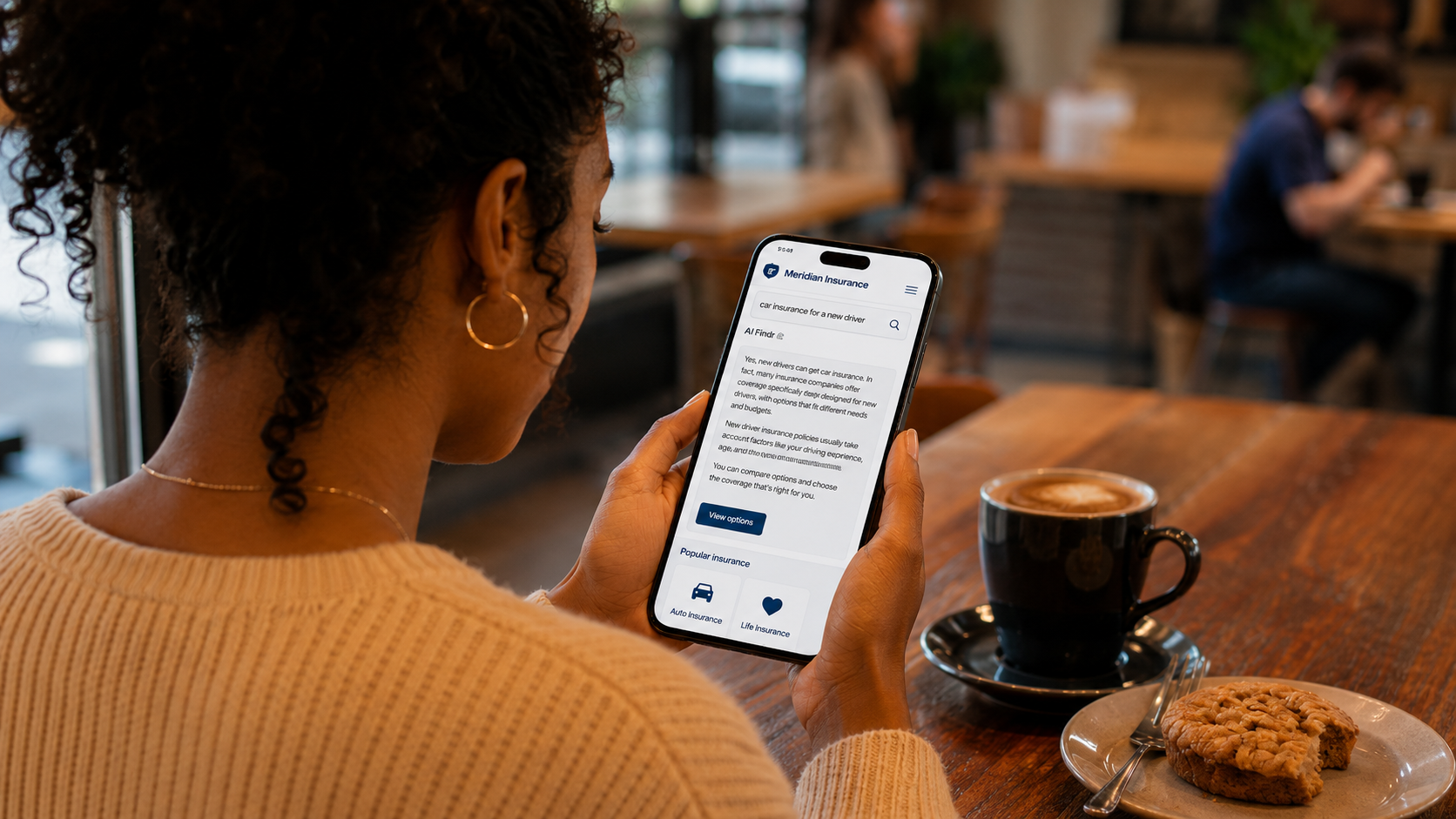
What Happens When Someone Searches on Your Website?
A standard insurance website search bar returns results. The user clicks, navigates, maybe finds what they're looking for, maybe doesn't. If they don't find it in the first few seconds, they close the tab.
No conversation. No qualification. No commercial referral. Purchase intent enters through one side and exits without leaving a trace.
This is the pattern that repeats across insurance companies of all sizes: they invest in traffic, in campaigns, in SEO, and then lose the conversion at the exact moment the user is most ready to buy.
The Search Bar as a Sales Surface
AI search for insurance isn't just an improved search engine. It's an agent that does two things simultaneously: resolves the user's query and, when the query carries commercial intent, converts it into a sales opportunity.
The operational difference is concrete.
A traditional search bar returns a list of pages. An intelligent search engine understands the question, gives a direct answer, and if the user is considering a product, takes them to the next step in the purchase process.
It's not a generic chatbot. It's a system trained on the insurer's actual catalog: products, coverages, conditions, frequently asked questions. Every answer comes from that approved knowledge, not from a public database.

The Numbers from a Real Deployment
The results below come from an AIFindr deployment as an intelligent search engine on the web channel of a Latin American financial group with more than 13 million customers. The search engine operates on the main site with personalized question prompts and does two jobs in parallel: customer support and product sales.
Results after implementation:
- +64% in search usage
- +70% in product referrals
- +121% in net sales (approximately 90% were new product openings)
- +52.6% in pre-approved product requests
- CSAT: 11% → 33% — the channel went from frustrating to functional
- NPS: +39 points
- Over 100,000 queries handled
The most revealing figure is +121% in net sales. That's not a marginal improvement. It's proof that a web channel, treated as a sales surface, produces results that a support channel never will.
Why This Matters Specifically in Insurance?
In insurance, the search moment is the moment of highest purchase readiness.
When someone searches "family life insurance" on an insurer's website, they're not researching abstractly. They're evaluating. There's an event behind it — a child just born, a loan just taken out, a renewal coming up — and they're at the peak of their purchase intent.
If in that moment they receive a clear, direct answer and find a natural path to the next step, the probability of conversion is at its highest.
If they receive a generic list of results that forces them to navigate, the intent cools. The user closes the tab. The insurer loses the sale without knowing they were close to closing it.
What Makes an Intelligent Search Engine Different in an Insurance Context?
Three aspects make this technology work specifically in an insurance environment.
Controlled knowledge. The system responds only from the catalog and documentation the insurer has approved. It doesn't improvise, doesn't mix products, doesn't give outdated information. For an insurer with multiple product lines and conditions that vary by market, this control isn't optional.
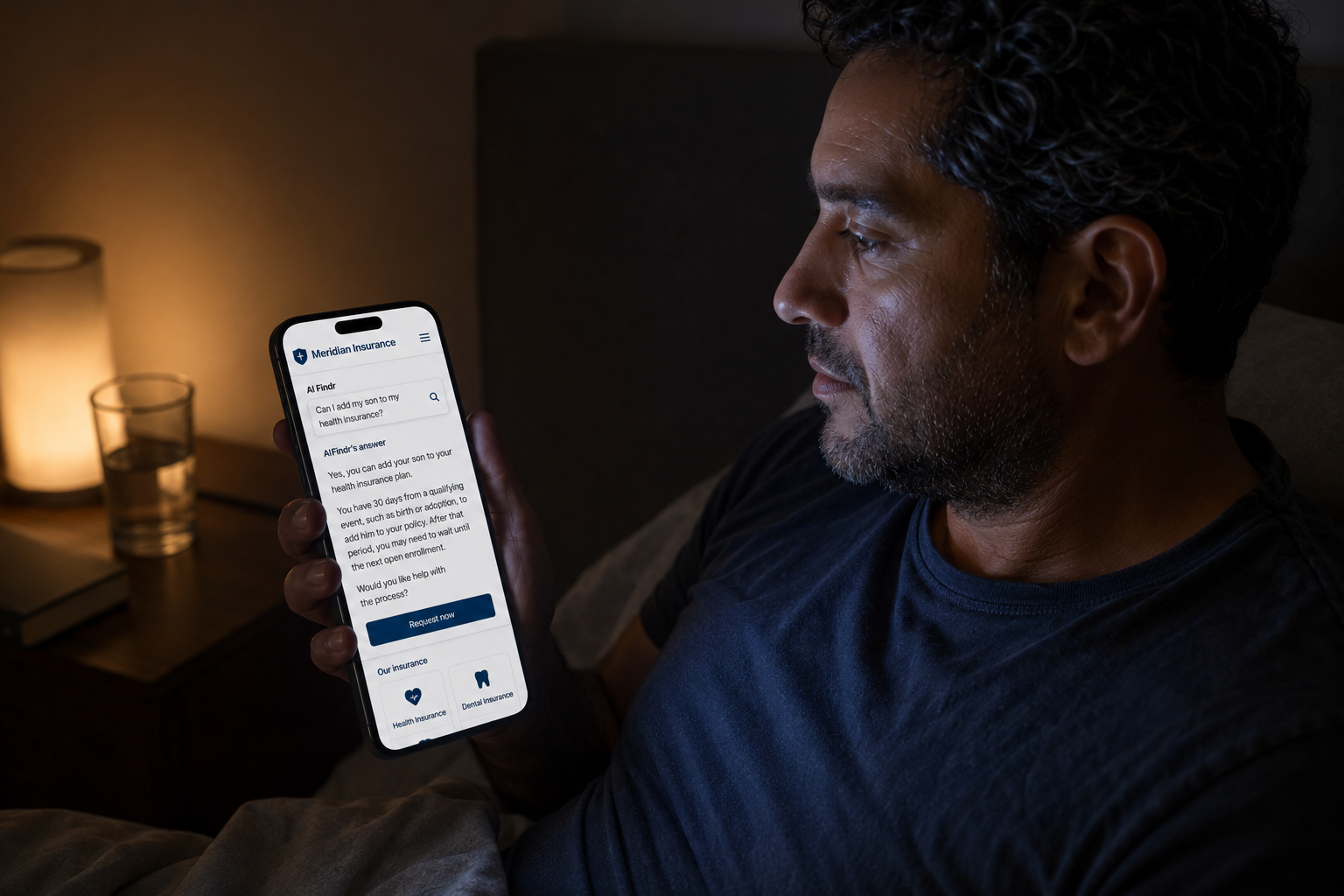
Intent detected, action taken. When a query has commercial intent — the user is comparing, asking about prices, or requesting specific conditions — the system doesn't just respond: it routes to the purchase flow or to the sales team with full context of what the user searched for. The sales agent doesn't come in cold.
Outside business hours. A significant portion of searches with purchase intent happen outside office hours. An intelligent search engine doesn't close. It captures that intent, responds, and either converts or saves it for follow-up.
The Question Worth Asking
How many users search on your website each week with the intent to buy insurance, and leave without finding what they needed?
That number is the opportunity an intelligent search engine converts.
Find out how many queries AIFindr could handle in your channel.
Or if you'd rather start with a conversation: Facing the same challenge? Let's talk.
Frequently Asked Questions About AI Search for Insurance
- What is an intelligent search engine for insurance? It's an AI-based search system that, instead of returning a list of pages, understands the user's question and delivers a direct answer drawn from the insurer's real knowledge base. When it detects commercial intent, it acts as the first step in the sales process.
- How is it different from a chatbot? A chatbot is designed for guided conversation flows. An intelligent search engine responds to open queries — the way a user would expect from a search engine — but with precise answers and commercial outcomes. They're tools with different logic and different use cases.
- Can an insurer control what information the search engine provides? Yes. A well-implemented intelligent search engine responds only from the catalog and documents the insurer has approved. It doesn't generate its own content or mix in information from external sources. The insurer's team manages and updates that knowledge base.
- What types of queries does it handle well in an insurance context? It handles both support queries ("what does my home insurance cover?") and queries with commercial intent ("how much does life insurance cost for two people?", "compare basic vs. comprehensive car insurance"). The former get resolved. The latter become commercial referrals.
- Can it be integrated into an existing insurance website? Yes. It doesn't require replacing the insurer's existing infrastructure. It's implemented as an intelligent search layer on top of the current web channel.
- What results can an insurer expect? Results vary based on traffic volume and channel maturity. In documented AIFindr deployments on financial services web channels, results include +121% in net sales, +70% in product referrals, and a 39-point NPS increase.